AI & Me
Overview
I designed, built, tested, and shipped a product website with a full reservation funnel: Stripe payments, email signups, and a database. I worked solo and delivered in under a week. It generated about 800 signups and 200 paid reservations in the first month.
Role
Senior Product Designer
@ Subject XYZ
Timeline
1 day to launch,
8 days of testing & iteration
Stack
Lovable, Claude, Framer, Stripe, Supabase, Tally, Meta Ads Manager
Deliverables
Marketing site, reservation funnel, newsletters

Context
Our client, Bladeight, was an early-stage hardware startup building a premium razor blade. They were still procuring manufacturing, had no software engineers on staff, and were working with our team to design their hardware.
Nearing launch, Bladeight needed a website asap to start capturing demand. Given the tight turnaround and scope, this was the perfect project to test a fully AI-driven workflow.
Challenge
The site had one goal: convert visitors into reservations or email signups. But it also had to look the part. An expensive razor demands the visual language of a premium brand: large responsive imagery, transparency effects, and varied section layouts.
Building that by hand on a one-week timeline wasn't realistic for me. I'll admit I considered Framer first because I didn't fully trust AI yet. But a conventional funnel is exactly where AI shines.

Approach & Key Decisions
It's far more effective to test a wrong answer than it is to test no answer. Instead of researching toward a first draft, I deployed a viable site on day one and spent the rest of the week iterating it against real user data.
The client was heavily inspired by Apple, so my first prompt referenced Apple's layout patterns alongside product renders from our industrial designer. Beyond that, I deliberately gave Lovable little direction besides user points generated by Claude. Starting with a barebones prompt can give the AI a chance to unravel paths forward I hadn't considered. Once I had my first iteration, the question was now how do I test fast?
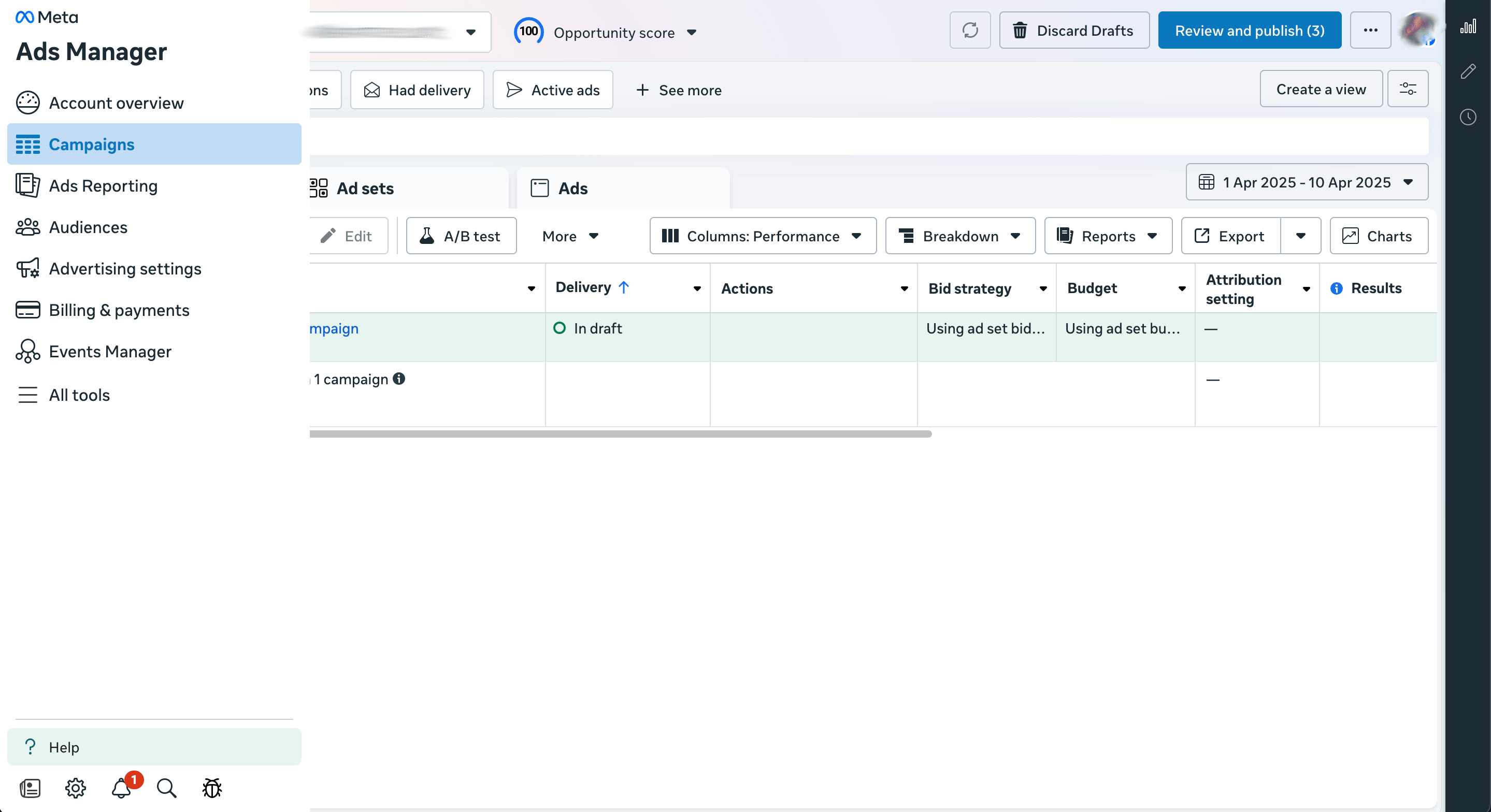
Recruiting the right test users normally takes weeks. The client was already setting up Meta Ads Manager, so I used it as a live testing pipeline: two domains, identical ads, real traffic, real metrics. I measured success on cost per lead, conversion rate, and click-through rate.
At this pointed we needed actual user data to target the ads properly. I went out and interviewed barbers in my city. Those conversations gave me user data for Ads Manager, and told me exactly which product features to prioritize on the page. For example, barbers loved thinner blade heads, so that feature went higher up in the site hierarchy.
I tested layout variations and, crucially, the level of detail on the page. Because the audience was professional barbers, they responded better to more technical detail, and leaned toward the sportier, edgier design directions. My goal here was balancing information without bogging down the funnel.
I setup Stripe to handle reservation, Supabase handle records, and Tally to handle emails. The funnel was intentionally minimal to reduce the chance of creating pain points we can't quickly test for. I let AI generate the payment and signup flows (coordinating credentials and account setup with the client), and they worked with only minor copy touch-ups.
Results
The site launched in one day. Testing and iteration ran over the following 7–10 days.
Reservations
800 email signups & 200+ reservations.
CTR
9%, brought up from 3% on day 1.
CPR
$4.04, brought down from $20.
Views
6000 views by end of project.
Reflection
This project changed how I approach design completely. Design used to follow a fixed sequence: research, define, ideate, deliver. With AI, discovery and design happen simultaneously. The designers who win in this workflow are the ones who can get real user signal fastest.
One thing I would do differently is use AI even more. At the time, I wasn't quite convinced that AI would be capable of storing a knowledge base well. Going forward I began connecting Claude to all my AI tools and research data.