
Designing From 0 to 1
Product
Asterisk is an ad campaign management platform built for Hawthorne Advertising’s account managers and clients. More than just a dashboard for live data, Asterisk informs long-term ad strategy through innovative, narrative-driven data visualizations.
Problems
This project faced significant hurdles from day one. Early in development, we lost our product leadership and half the department to mass layoffs. I stepped up to lead our remaining small team while serving as the sole designer.
Simultaneously, we discovered that our data pipelines were extremely faulty, rendering our initial data visualizations unusable. What initially felt like a project-ending setback eventually forced us to innovate in surprising ways.
Methods
Results
Before Asterisk, strategy meetings were centered around complex spreadsheets, often leading to confusion and misalignment. After the platform launched, meeting duration decreased by 25% overall, while the quality of engagement surged.
Time spent interpreting data dropped by 50–90%, allowing participants to skip the "clarifying questions" phase and jump straight into strategy. Stakeholder alignment improved significantly as the visualizations clearly communicated campaign narratives and KPIs.
Solutions
When we realized we couldn't fix every data issue before launch, I designed a clever workaround: composite scorecards. At the end of the day, users primarily want to know the health of their ads at a glance. We developed a dynamic composite score based on the healthy KPIs we could track.
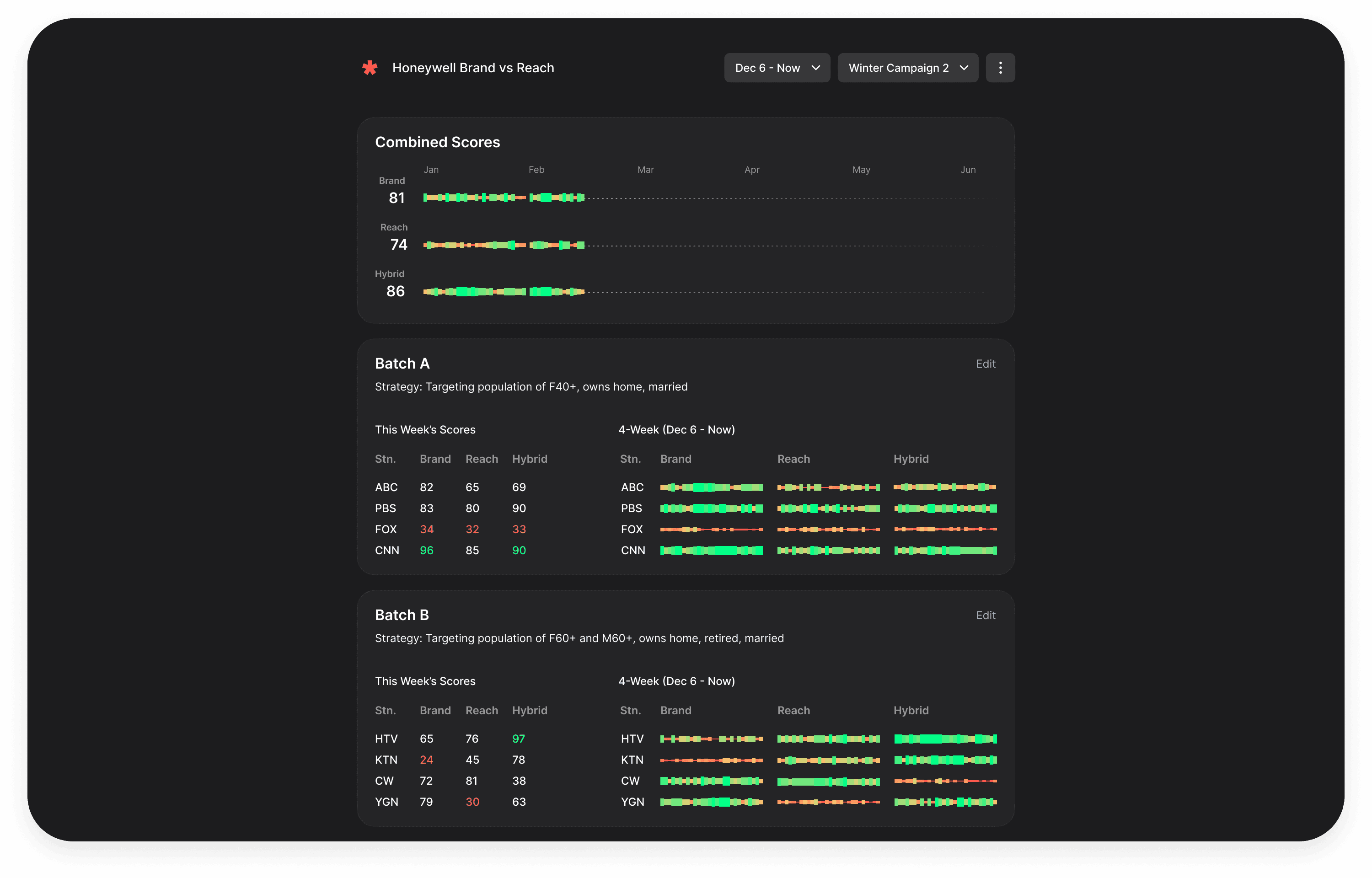
This system allowed users to measure the health of specific campaign strategies (Brand, Reach, Hybrid), stations, and even timeslots. Huge shoutout to our data scientists for the math that made this possible.
My goal was to turn dense data into a narrative. I designed what I dubbed the "heatmap" data viz, where each vertical bar represents a day and the color represents the performance score (Green for 100, Red for 0). By looking at this single visualization, a user can immediately identify which stations to reinvest in and which to abandon. No complicated spreadsheets required.
To ensure our data remained reliable, we built a slew of internal tools to keep data pipelines squeaky. One of those tools is Obelisk.
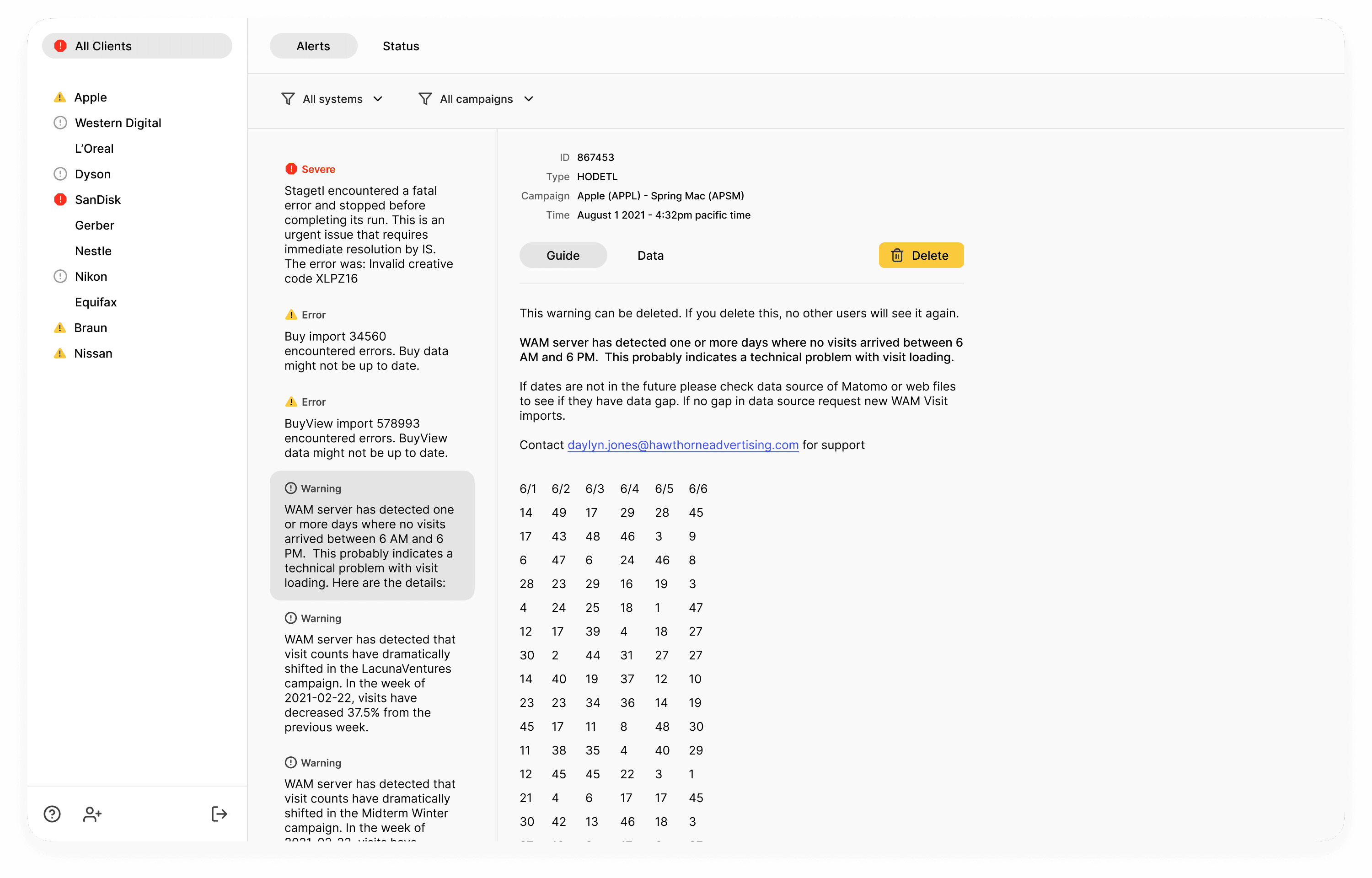
Obelisk is a backend error identifier. It monitors issues, alerts the relevant departments, and provides guides for users to troubleshoot when possible. For example, it identified a specific vendor that consistently missed data deadlines, allowing our team to address the issue directly.
I am incredibly proud of what my team and I accomplished amidst the chaos. These constraints pushed us to double down on what truly mattered to our users.